Butch.org
This is the personal blog of LGBT film historian and filmmaker Jenni Olson
Wednesday, May 22, 2013
575 CASTRO ST. Harvey Milk Day Update
Harvey Visits the 8th Graders
First and foremost I just have to share that I had the opportunity to present the film to the 8th Grade class at Brandeis Hillel Day School this afternoon and had a fantastically inspiring experience with the kids talking about Harvey as the gay (and Jewish) hero that he was. Here in California, the law that set out May 22nd as Harvey Milk Day also encourages public schools and educational institutions to conduct suitable commemorative exercises.
In my introduction to the film I spoke a bit about who Harvey was and how FilmInFocus.com had asked me to make this short film for the Milk website back in 2009; and then asked the kids to think about why Harvey was so focused on how important it is for people to come out.
I confess I brought along a box full of HRC equals sign buttons to hand out to the kids afterwards — yes, I have some political bones to pick with HRC but the ubiquitous and highly meaningful symbol was too valuable to resist. It was incredibly moving to see most of the kids pinning the buttons to their jackets and backpacks without hesitation, and to know that they and their generation are literally making the world safer for LGBT people.
For any of you California educators out there — I have a great little double-sided one-page hand out you can use to present the film to your class as a Harvey Milk Day activity next year. You can use the handout to guide the discussion and show the film directly at the FilmInFocus.com 575 Castro St. page or the Sundance Screening Room YouTube page (just send me a Facebook message and I will get you the handout).
Watch at the Sundance Screening Room & Elsewhere
I’m also proud to share that there is a brand new opportunity for everyone to see the film by visiting the Sundance Screening Room YouTube page where it is being freshly showcased for Harvey Milk Day.
As always, San Franciscans and visiting tourists can view the film in the most perfect venue I could ever have imagined: The HRC Action Center & Store which is located at the now legendary address of Harvey Milk's old Castro Camera shop (yes, that would be 575 Castro St.).
Working with our awesome GLBT Historical Society the HRC folks have created a wonderful historical display about Harvey Milk and Castro Camera. A prominent part of the display is an installation of my film, 575 Castro St. exhibited on a continual loop, with a set of headphones so you can listen to the soundtrack while you watch.
Of course the most amazing thing about this is the fact that not only was my film footage shot at this address (in 2009 when it was the empty Castro Camera Store set of Gus Van Sant's Milk) but the audio of Harvey Milk talking about his wishes in the event of his assassination was also recorded in this very room (not upstairs in his apartment as fictionally depicted in Milk).
Big continuing gratitude to everyone at FilmInFocus.com, the GLBT Historical Society, HRC and also the Harvey Milk Foundation for their ongoing work maintaining the legacy of Harvey Milk.
Tuesday, April 09, 2013
In Defense of Vito

My response to Mark Adnum's "Skeletons in 'The Closet'" attack on Vito Russo's The Celluloid Closet in today's Huffington Post:
Oh, Mark. This is such a willful misinterpretation of the book on so many levels. Vito's critique was of the many ways that mainstream cinema intentionally represented gay characters in limited stereotypes (it seems like you are either making an intentional effort to misunderstand his meaning or you are really just not grasping the nuance). Your implication that Vito was some kind of internalized homophobe who didn't appreciate nellyness and effeminacy is absurd. On the contrary, you leave out one of the most significant aspects of his thesis which explicitly addresses this and places him squarely as the feminist progressive he was.
In discussing early buddy films (and specifically the relationship between John Gilbert and Lars Hanson in Flesh and the Devil) Vito writes: "The primary buddy relationships in films are those between men who despise homosexuality yet find that their truest and most noble feelings are for each other. There is a misogyny here that goes beyond simple hatred for women and things feminine. If the truly masculine man hated women — in the sense that he trusted only men as true friends — what then would be his reaction to homosexuals who are perceived to be "like" women yet are in fact male? It would be even more violent, it seems, for gays are the manifestation of what stands between men's complete love of other men and their acceptance of women as friends. Always wary that they might appear too effeminate and therefore queer (like women), men have never been granted the full emotional potential they might have had on film."
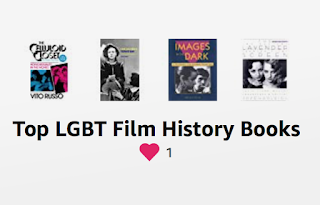
The Celluloid Closet has become the "Bible" that it is because it was ambitious, took a broad view of the landscape, had a straightforward thesis and was brought ought widely by a mainstream publisher. Vito's fundamental objective was to draw attention to the fact that we deserved better portrayals of queer characters on screen (especially by Hollywood, hence his limited treatment of non-American films — and, as you surely know, he did address this in the second edition which includes reflections on Almodovar, von Praunheim, Visconti and other European directors). Through his life and work he made significant contributions towards that goal and deserves the respect and admiration he has earned. It's great to see you mention all these other wonderful LGBT film books which are also must-read contributions to the field (although I would also argue that Parker Tyler's approach to his material in Screening the Sexes is a taste I have yet to acquire). Subsequent (post-Celluloid Closet) titles also really worth reading include Richard Dyer's Now You See It; Ray Murray's Images In The Dark, Andrea Weiss's Vampires & Violets and Boze Hadleigh's The Lavender Screen.Jenni Olson LGBT filmmaker and film historian (and author of The Queer Movie Poster Book and The Ultimate Guide to Lesbian & Gay Film and Video)
Sunday, March 03, 2013
TED2013: Inspired
Highlights of the week included the following TED Talks: the former Governor of Michigan, Jennifer Granholm making the case for jobs and clean energy; the surprisingly smart and super articulate Bono talking about his work on global poverty reduction; photographers Sebastiao Salgado and Camille Seaman; Tesla/Solar City founder Elon Musk; the teenage scientists Taylor Wilson and Jack Andraka; L.A. urban gardening activist Ron Finley and Australian math geek Adam Spencer.
I also especially enjoyed Phil Hansen on creativity arising out of limitations; Freeman Hrabowski on education; deep sea squid researcher Edith Widder; the young Kenyan inventor Richard Turere; Mohamed Jemni's WebSigns ASL avatar translator and Alex Laskey on reducing household energy use and his organization, OPower. As well as the musical performances of the Sleepy Man Banjo Boys, Amanda Palmer and Ji-Hae Park.
Most of these are not up on the TED site yet but keep an eye out for them in the coming weeks.
In addition to the amazing array of TED Talks I was especially excited to experience the TED Fellows program of up and coming thinkers, activists, artists and innovators. You can find out more about the TED Fellows program — including how to apply — right here. I also got to meet and talk with tons of interesting TED attendees. The guest list is as impressive as the line-up of speakers.
Next year's conference will take place March 17-21st in Vancouver, BC, Canada. Click thru to find out how to apply.